What an Aerial Photography Business Actually Does Beyond Real Estate
Ask ten people in Richmond what a drone company actually does, and most of them will say real estate. Fair guess, honestly, since that’s where most homeowners first spot a drone hovering over a listing photo. But that answer misses about six other things happening behind the scenes on any given week, and it undersells just how much ground a modern aerial photography business actually covers.
I Fly Drones has been flying over Richmond and Henrico since 2017, and the work looks a lot less like “point camera at house” and a lot more like a toolbox that keeps growing every year new technology shows up.
Real Estate Started It, But It’s Far From the Whole Story
Real estate is still where most people’s minds go first, and for good reason. A listing with aerial shots of the roofline, the backyard, and the surrounding neighborhood tends to pull in more interest than one without. Buyers today expect that kind of visual, not just a handful of interior photos snapped on a phone.
But the same skill set that makes a listing photo sing also applies to construction sites, farmland, event venues, and even public safety operations. Once a pilot understands how to frame a shot from three hundred feet up, that skill doesn’t stay locked inside one industry.
Construction Sites Get a Completely Different Kind of Value
A drone soaring through a live job site doesn’t fly simply for making fancy pictures. It takes high-definition pictures that are utilized by engineers and contractors in terms of controlling the work progress, preventing problems beforehand, and ensuring the job continues on schedule instead of sending someone on the rooftop or scaffolding for supervising the work. The last aspect is more important than people think. Rooftop and structural inspection entails various risks if a person has to go there. A drone eliminates that risk while getting high-resolution pictures.
Image mapping and photogrammetry take this a step further, turning aerial footage into measurable data architects and engineers can actually plan around before the first shovel hits dirt. It’s less “cool footage” and more “here’s exactly how much material this project actually needs.”
Agriculture Is a Bigger Piece of This Than Most People Expect
Farmers and landowners have started leaning on drone technology for a lot more than photos. Pond management, crop monitoring, and land assessment all benefit from an aerial view that would otherwise take hours of walking a property line to gather manually. A five-minute flight can show a farmer exactly where drainage is pooling wrong or where a crop section is struggling, information that used to require guesswork or a much longer walk.
Events, Festivals, and the Moments Nobody on the Ground Can Capture
Music festivals, sporting events, weddings, and even memorial services have become regular work for a drone crew that knows how to handle a crowd safely. Getting FAA clearance for flights over large gatherings isn’t optional paperwork either; it’s required, and events sometimes need up to 90 days of lead time to secure the right variance depending on airspace restrictions in the area.
Memorial services deserve their own mention here, since flying a drone at one requires a level of sensitivity that goes beyond just following FAA rules. Timing, distance, and discretion all matter enormously when a family has asked for aerial footage of a service honoring someone they’ve lost.
Public Safety and Search & Rescue Work Rarely Gets Talked About
This is probably the least visible part of what an aerial photography business does, and also one of the most meaningful. Thermal and infrared imaging lets a drone spot a missing person or a heat signature in conditions where ground search would take far longer, sometimes with far less success. Search and rescue teams increasingly rely on this kind of aerial support because it genuinely saves time in situations where every minute counts.
Drone Light Shows Are Changing What “Fireworks Alternative” Even Means
As a relatively new option for audiences, the rise of drone light shows is evident. They are taking over fireworks displays and are being preferred at community gatherings, weddings, and festivals alike. While being silent, these shows do not leave behind any waste. Coupled with this is the fact that the choreography of drone shows can be tailored as per the needs of the client, something not achievable with traditional fireworks. Thus, this has become quite a good option for a number of towns wanting to opt for an eco-friendly alternative worth trying out.
Training Rounds Out the Picture
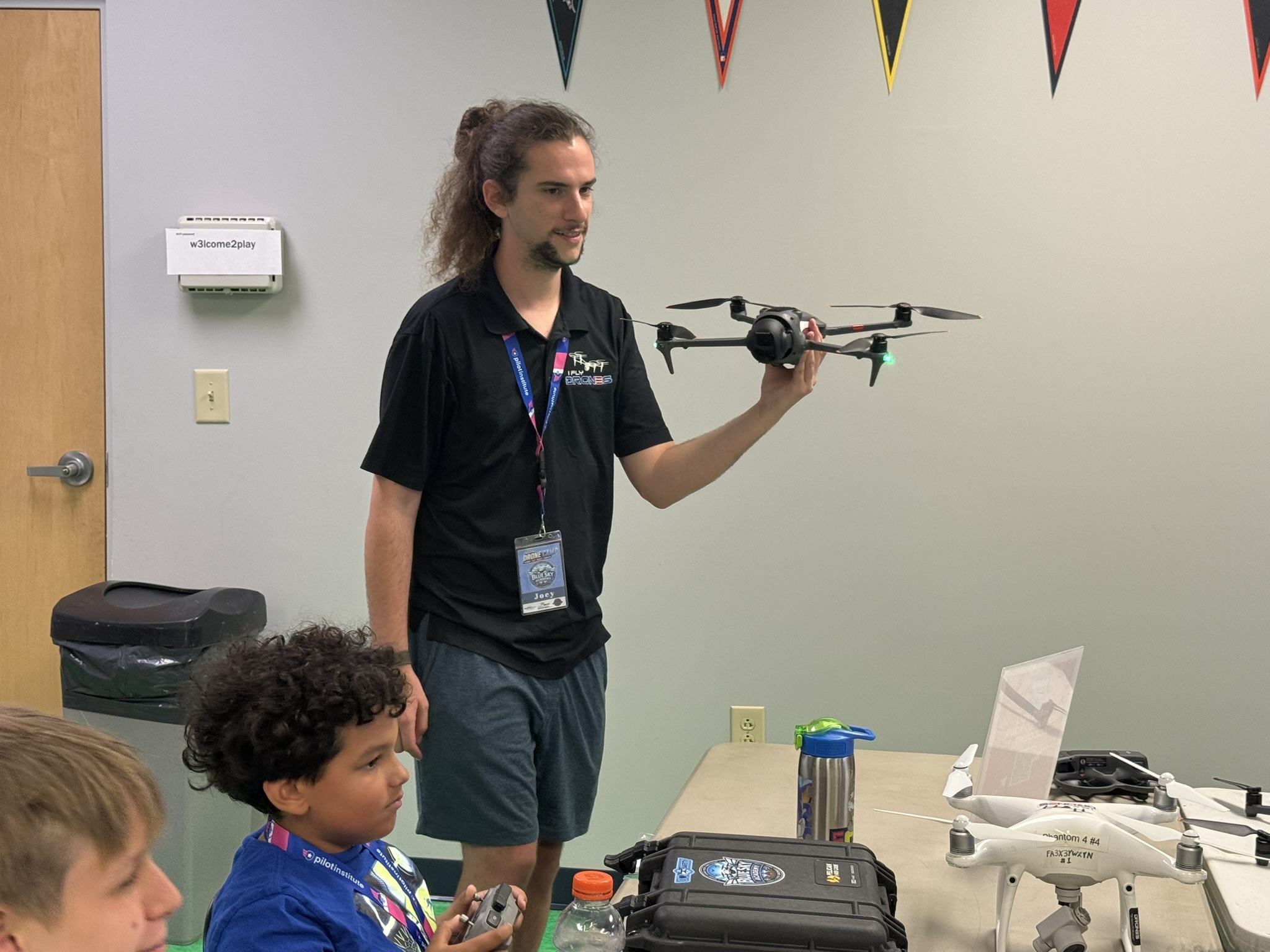
Not everything an aerial photography business offers involves flying the drone themselves. Teaching others to fly, whether that’s a hobbyist, a public safety professional, or someone entering the industrial drone space, has become its own service line. Hands-on training built around real scenarios tends to prepare a new pilot far better than a purely classroom-based course ever could.
Why This Range of Services Actually Matters to a Client
A business that only knows how to shoot real estate listings can’t pivot when a construction client needs progress tracking, or when a city needs a light show instead of fireworks for a Fourth of July event. Working with a team that’s built expertise across all these areas means one relationship covers a lot more ground than hiring a different specialist for every single need.
In Closing
Compared to what it was in 2016, a photography business carried out via drones in 2026 has changed completely, and real estate is merely the first major activity that is noticeable for all. Not only the surveys of buildings, but also monitoring of agricultural lands, filming of events, assistance in public safety, as well as drone shows are now a part of a widely used technology, and thus a company which has gained much experience in all these spheres can provide more services than an ordinary professional photographer.
Frequently Asked Questions
Does an aerial photography business only handle real estate photos?
No. Real estate is often the most visible service, but construction surveying, agriculture, events, and public safety work make up a significant share of the industry today.
Do drone operators need special certification to fly commercially?
Yes. FAA certification is required for commercial drone operations, and additional permitting is often needed for flights over crowds or near restricted airspace.
How far in advance should an event book drone coverage?
Large events sometimes need up to 90 days of lead time to secure proper FAA clearance, so booking early is strongly recommended.
Can drones actually help with search and rescue operations?
Yes. Thermal and infrared imaging allows drones to detect heat signatures in conditions where a ground search would take much longer.
Are drone light shows a real replacement for fireworks?
Increasingly, yes. They’re quieter, leave no debris behind, and offer choreography options fireworks simply can’t replicate.